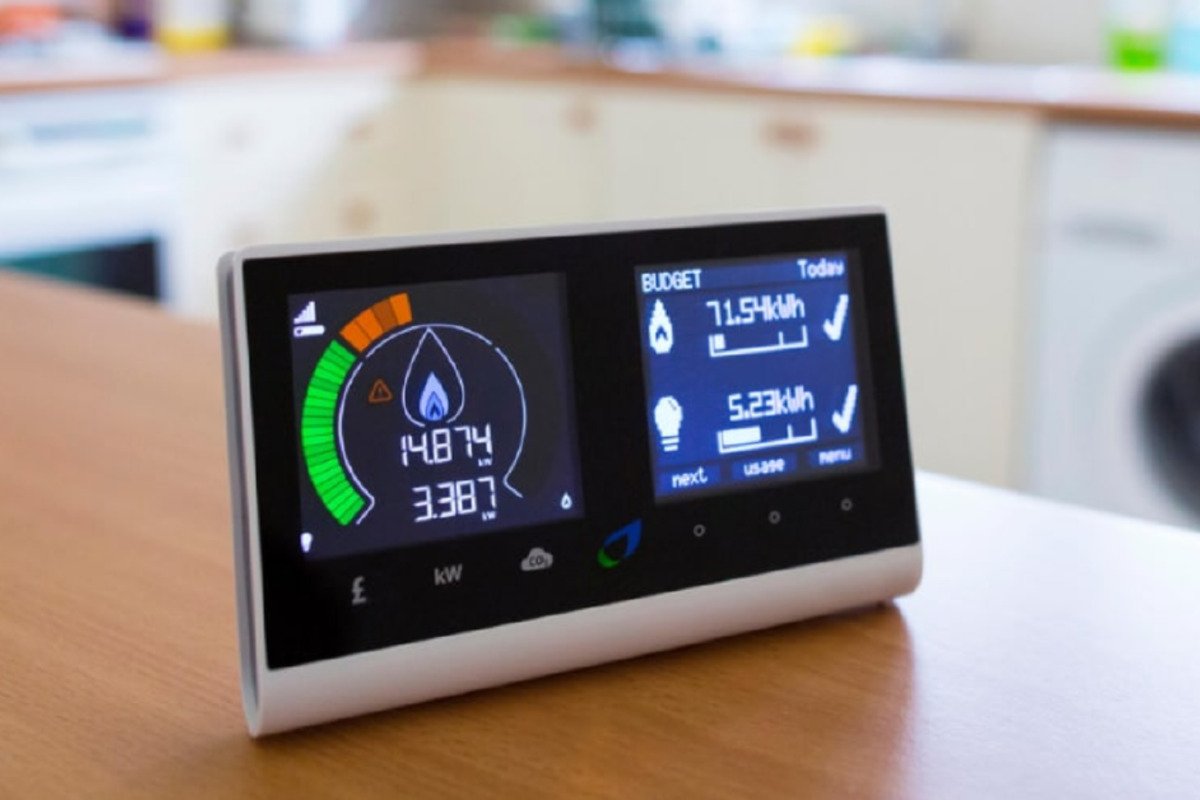
Smart meter reading replaces the manual, monthly process of utility workers visiting your home with automated, near-real-time data transmission directly from your electricity, gas, or water meter to your utility provider. Instead of someone checking your analog dial or digital display once a month, smart meters use wireless communication networks to send consumption data at intervals ranging from every 15 minutes to hourly, depending on the system and regulatory requirements in your area.
The technology behind this shift centers on Advanced Metering Infrastructure (AMI), a two-way communication system that allows utilities to collect granular usage data while also enabling remote service connections, outage detection, and voltage monitoring. For consumers, this means billing based on actual consumption rather than estimates, the ability to track energy use in detail through online portals or mobile apps, and faster response times when problems occur.
Understanding how smart meter reading works matters because it fundamentally changes your relationship with energy data. Traditional meters offered a single monthly snapshot. Smart meters generate thousands of data points per year, revealing patterns in your usage that can inform decisions about when to run appliances, whether time-of-use pricing plans make financial sense, and where unexpected consumption spikes occur.
Dr. Maria Chen, an electrical engineer specializing in grid modernization at Pacific Energy Systems, explains that the accuracy and frequency of smart meter readings also reduce billing disputes and eliminate the inefficiencies of estimated reads. The challenge for many households lies not in the technology itself but in learning to interpret and act on the detailed information now available.
The Technology Behind Automated Meter Reading
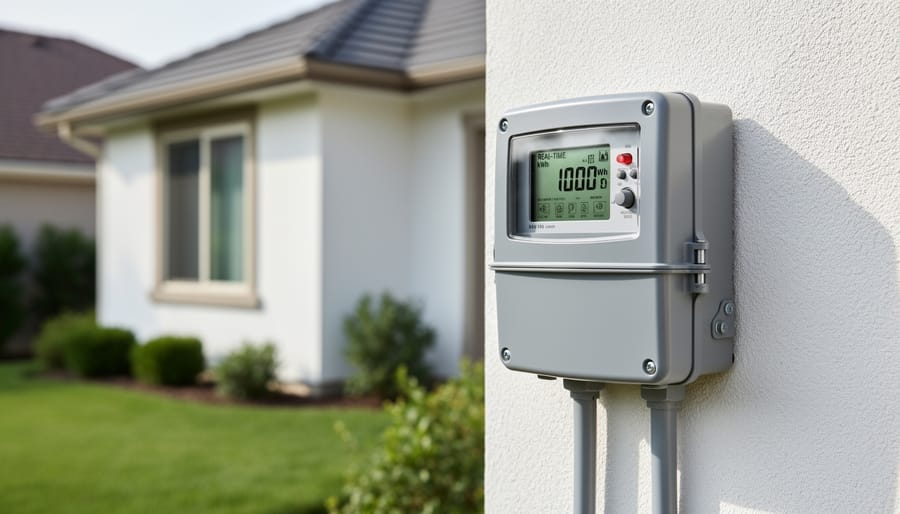
At its heart, a smart meter is a measurement device wrapped in digital intelligence. Unlike the spinning disk meters that relied on electromagnetic induction to turn a mechanical counter, smart meters use solid-state sensors with no moving parts. These sensors detect the flow of electricity through your service line by measuring voltage and current multiple times per second, calculating instantaneous power consumption with precision that mechanical systems could never match.
The meter doesn’t just measure; it remembers. Inside each unit sits a memory chip that stores consumption data in timed intervals, typically every 15 minutes to an hour depending on the utility’s configuration. Think of it as a detailed logbook that captures your energy use throughout the day, creating a granular picture of when and how much power flows into your home or business. This stored data becomes the foundation for everything smart meters enable, from accurate billing to consumption pattern analysis.
What makes these meters truly “smart” is their ability to communicate. Each unit contains a wireless module, the technology varying by deployment and geography. Some use radio frequency mesh networks, where meters relay data to one another until reaching a collection point with internet connectivity. Others employ cellular connections, essentially giving each meter its own mobile data plan. In certain installations, particularly urban areas with dense infrastructure, utilities use powerline communication, transmitting data as signals along the same electrical wires that deliver power.
The journey of your consumption data follows a predictable rhythm. Throughout the day, your meter records usage and stores it locally. At predetermined intervals, often nightly but sometimes more frequently, the communication module wakes up and transmits the accumulated data to the utility’s collection system. This might happen through a neighborhood collector node, a cellular tower, or encoded pulses on the power lines themselves. The utility’s data management system receives these transmissions, validates them, and integrates the information into billing and grid management databases.
From a consumer’s perspective, the process is invisible. The meter quietly measures, stores, and reports without manual intervention, transforming what was once a monthly snapshot into a continuous stream of information that flows from your property to the utility’s operations center.
How the Reading Process Actually Works
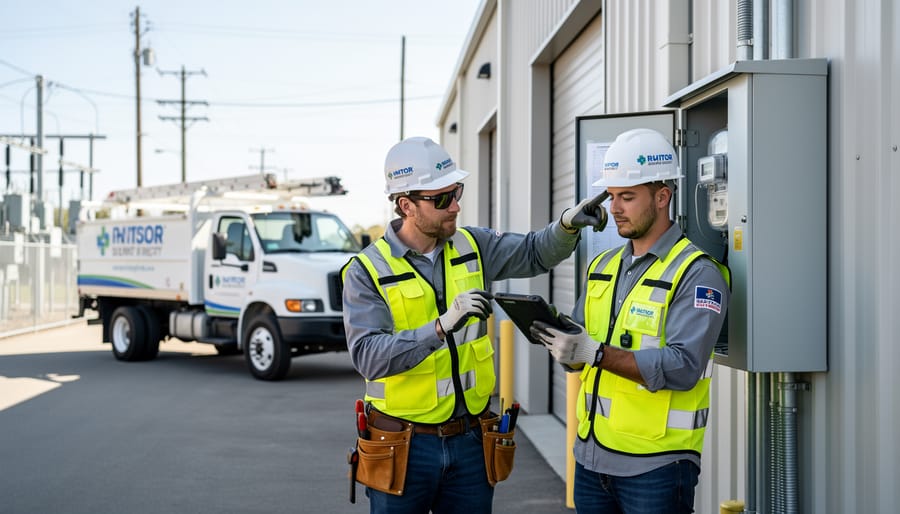
Every time you switch on a light or run the dishwasher, your smart meter sets a quiet, precise process in motion. Unlike the old mechanical dials that spun faster under load but recorded only a cumulative total, modern smart meters break your consumption into discrete snapshots that reveal when, not just how much, you use energy.
The sequence unfolds like this:
- Digital sensors inside the meter measure the electrical current passing through in real time, converting the analog flow into digital pulses that represent watts consumed.
- An internal microprocessor samples these measurements at regular intervals, typically recording data collected every 15 minutes to an hour, depending on your utility’s configuration and regulatory requirements.
- The meter stores these timestamped readings in onboard memory, building a chronological record that spans days or weeks before older data gets overwritten.
- At predetermined intervals, usually once daily but sometimes more frequently, the meter’s communication module activates and transmits the accumulated readings to the utility via wireless radio, cellular network, or powerline carrier signals.
- The utility’s data management system receives the transmission, validates the readings against expected ranges and historical patterns, then updates your account and feeds the information into billing and grid monitoring platforms.
This cycle repeats continuously, invisible and automatic. If communication fails during a scheduled transmission, the meter retries at the next interval, ensuring no data is lost since it remains stored locally until successfully sent. The process operates independently of whether anyone is home or paying attention, eliminating the need for meter readers to enter your property and making estimated bills largely obsolete.
What makes this architecture particularly robust is its redundancy. The meter does not depend on a single transmission window. Even if several attempts fail due to temporary network issues, the device queues the backlog and uploads everything once connectivity resumes, maintaining the complete consumption record your utility needs for accurate billing and grid planning.
What Data Smart Meters Collect and Transmit
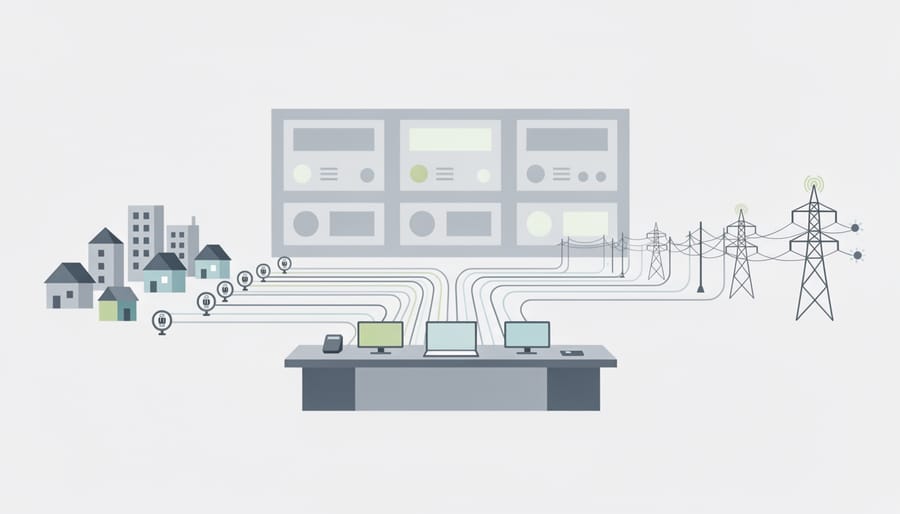
Smart meters capture several distinct categories of data, each serving specific operational and billing purposes. At the most basic level, they record cumulative energy consumption measured in kilowatt-hours, typically logging readings at intervals ranging from 15 minutes to an hour. This granular time-stamped data replaces the single monthly snapshot from traditional meters, creating a detailed consumption profile throughout each day.
Beyond consumption totals, smart meters monitor electrical characteristics of the power supply itself. They track voltage levels and frequency, which helps utilities identify grid stability issues before they escalate into wider problems. When power interruptions occur, the meter timestamps the outage and restoration, allowing utilities to map affected areas and verify service recovery without relying on customer calls.
Many meters also include tamper detection mechanisms that flag unusual patterns suggesting bypass attempts or unauthorized modifications. These alerts trigger investigation rather than automatic penalties, as legitimate equipment issues can sometimes produce similar signals.
What utilities cannot see is equally important for privacy considerations. Standard smart meters do not identify specific appliances or activities within your home. The aggregated consumption data shows overall usage patterns but cannot distinguish whether you are running a washing machine, charging devices, or watching television. Energy engineers note that while theoretically possible to infer some activities from detailed load signatures, utilities do not deploy such analytics on residential accounts, and regulations in most jurisdictions explicitly restrict this level of monitoring.
The granularity of transmitted data varies by utility and regulatory framework. Some systems transmit detailed interval data daily, while others send only daily totals with full interval data available on request. Consumers can typically access their own granular usage history through utility portals, though the level of detail and historical depth available differs significantly across providers.
Real-World Applications and Benefits
For Households and Businesses
For households and businesses, automated readings eliminate the frustration of estimated bills based on historical usage rather than actual consumption. Every billing cycle now reflects what you genuinely used, which matters most when your patterns shift, a home office replacing a commute, seasonal changes in heating or cooling, or new equipment coming online in a business.
The real value comes from access to granular usage data. Most utilities provide web portals or mobile apps where you can view consumption by day, hour, or even 15-minute intervals depending on your meter’s configuration. This visibility lets you spot patterns that would otherwise remain invisible: the baseline draw when you think everything is off, usage spikes from specific appliances, or the cost difference between weekday and weekend consumption.
Businesses benefit particularly from identifying operational inefficiencies. A restaurant might discover its refrigeration units consume twice the expected power, signaling failing compressors before they break down completely. Homeowners often find surprises too, an old freezer in the garage quietly driving up bills, or HVAC systems cycling more frequently than optimal settings would suggest.
The challenge is actually using the data. Many consumers never log into their utility portals or interpret the graphs when they do. The information exists, but translating it into actionable changes requires some effort and baseline understanding of what normal consumption looks like for your situation.
For Utilities and Grid Management
For utilities, automated smart meter reading transforms grid operations through continuous visibility into network conditions. Instead of dispatching meter readers on monthly routes, utility companies receive consumption data from thousands or millions of meters simultaneously, reducing operational overhead while improving data accuracy. This shift frees resources for grid maintenance and infrastructure upgrades.
Outage detection becomes nearly instantaneous. When a smart meter loses power, it can transmit a “last gasp” signal before shutting down, immediately alerting operators to the location and scope of an outage. Restoration crews arrive informed rather than responding to customer calls, and utilities can verify power return meter-by-meter rather than waiting for confirmation calls.
Demand response programs rely on granular usage data to balance grid load. During peak demand periods, utilities can identify which customers use the most energy and offer incentives to shift consumption to off-peak hours. This data-driven delivery of load management reduces strain on generation capacity and helps avoid rolling blackouts.
Integration with renewable energy sources becomes practical when utilities can monitor distributed generation from rooftop solar panels and track how energy flows bidirectionally through the grid. Smart meters measure both consumption and generation, enabling net metering programs and helping grid operators manage the variable output from wind and solar installations.
Common Challenges and Limitations
While smart meter reading eliminates many issues of manual collection, it introduces distinct technical and practical challenges that consumers and utilities must navigate.
Communication infrastructure remains the most common technical hurdle. Meters in buildings with thick walls, underground installations, or rural locations can struggle to maintain reliable connections with data collection networks. When transmission fails, utilities typically fall back on estimated readings until the connection restores, which undermines one of the system’s core advantages. Some deployments use mesh networks where meters relay signals through neighboring devices, but this approach depends on adequate meter density to function effectively.
Accuracy questions arise less frequently than with manual reads, but they do occur. Faulty sensors or firmware bugs can produce anomalous data, and consumers sometimes struggle to reconcile sudden usage spikes with their actual behavior. Utilities have validation protocols to flag unlikely readings, yet investigating discrepancies requires technical support that not all providers staff adequately.
Cybersecurity presents genuine concerns, though the risk profile differs from internet-connected home devices. Smart meters transmit encrypted digital content over dedicated networks rather than the open internet, limiting attack surfaces. However, large-scale deployments create centralized data repositories that require robust protection. Energy engineers emphasize that while individual meters are difficult targets, the aggregated data infrastructure demands ongoing security investment.
The human factor often proves more limiting than the technology itself. Accessing usage data through utility portals requires creating accounts, understanding consumption metrics, and interpreting patterns. Many households simply don’t engage with their data, missing opportunities to identify waste or adjust behavior for targeted outcomes. Without active use, the detailed information smart meters provide delivers minimal consumer benefit beyond accurate billing.
Understanding Your Smart Meter Reading
Most utilities provide online portals or mobile apps where you can view your smart meter data, though the interface and features vary by provider. After registering with your account number and postcode, you’ll typically find daily, weekly, and monthly consumption graphs, cost breakdowns, and comparison tools that show how your usage stacks up against similar households in your area. Some portals refresh hourly, while others update once daily, so check your provider’s specific data refresh schedule.
To identify usage spikes, look for sharp increases on your consumption graph that don’t align with known activities like running the washing machine or heating. A sudden jump might indicate a malfunctioning appliance, heating or cooling equipment running longer than expected, or devices left on inadvertently. Compare your current usage against the same period last year to account for seasonal variations.
Normal consumption patterns depend heavily on household size, property type, and occupancy schedules. A single-person flat might use 7 to 10 kWh daily, while a four-person detached house with electric heating could reach 30 to 50 kWh in winter. Your portal’s comparison feature can help establish a baseline, though remember these averages reflect diverse household behaviors and equipment efficiency.
Question a reading if it shows implausibly high or low usage compared to your established pattern, especially if nothing has changed in your routine. Cross-reference the meter display itself with the portal figure. If they don’t match, contact your supplier. Similarly, if your bill suddenly spikes without a corresponding increase in actual usage shown on the meter, request a detailed breakdown. You can spot quality research on meter accuracy standards through engineering publications, which confirms modern smart meters maintain accuracy within tight regulatory tolerances, making genuine errors uncommon but not impossible.
Frequently Asked Questions
Are smart meter readings more accurate than manual readings?
Smart meters measure consumption directly at the point of use with digital precision, eliminating human transcription errors and the need for estimated readings when access is difficult. While no metering system is perfect, automated readings typically provide more consistent accuracy than periodic manual checks.
What happens if my smart meter loses communication with the utility?
The meter continues recording your usage locally and stores the data in its internal memory. Once communication is restored, the accumulated readings are transmitted in batch, so no consumption data is lost during the outage.
Can I opt out of having a smart meter installed?
Opt-out policies vary by utility and region. Some jurisdictions allow customers to decline smart meters and keep traditional meters, often with an additional monthly fee to cover manual reading costs, while others have made smart meters mandatory as part of grid modernization efforts.
How can I verify my smart meter reading is correct?
Compare the reading to your previous bills to check for unusual spikes, and consider noting your meter’s display reading at the same time you check your utility portal to confirm the transmitted data matches. If you suspect an error, contact your utility to request a meter test, which most providers will perform at no charge.
Beyond these common questions, many consumers struggle with accessing their usage data even when it’s technically available. Some utilities provide detailed web portals with hourly breakdowns and historical comparisons, while others offer only basic monthly summaries. If you cannot find your data online, call your utility’s customer service line to ask about access options and whether they offer a mobile app or third-party integration.
When troubleshooting data access issues, first confirm you have created an online account linked to your meter number and service address. Registration processes vary, and some systems require verification steps that can delay initial access. If your account shows no data or outdated readings, the meter may not be communicating properly, which warrants a service call to check the communication module.
Understanding what constitutes a normal reading pattern for your household helps you spot problems quickly. Baseline consumption varies with home size, climate, appliances, and occupancy, so comparing your usage to generic averages is less useful than tracking your own month-to-month trends and investigating any significant unexplained changes.
Smart meter reading transforms energy monitoring from an occasional estimate into a continuous, automated dialogue between your home and the grid. This shift underpins modern energy infrastructure, enabling utilities to balance supply and demand in real time while giving consumers unprecedented visibility into their consumption patterns. Yet the technology fulfills its potential only when people actually use the data it generates. Many households with smart meters never access their usage portals or adjust behavior based on what the readings reveal, leaving efficiency gains unrealized. As smart home devices and renewable energy systems become more common, the value of granular meter data will grow, integration with home automation, battery storage, and dynamic pricing depends on the same automated reading infrastructure already in place. Understanding how to access and interpret your meter data isn’t just about checking a bill; it’s about participating in a more responsive, efficient energy system.