Smart meters measure your home’s electricity, gas, or water consumption in real time and transmit that data wirelessly to your utility provider, replacing the need for manual meter readings. Unlike traditional analog meters that require a technician to visit your property and record usage from a spinning dial, smart meters use digital sensors to track consumption automatically and communicate through secure wireless networks, typically cellular or radio frequency mesh systems.
The technology centers on three core components working together. First, precision sensors measure electrical current flow, gas volume, or water pressure at intervals as frequent as every few seconds. Second, an embedded processor converts these measurements into digital data and stores them locally. Third, a wireless transmitter sends encrypted usage information to your utility company’s central system, usually once per hour or several times daily depending on the network design.
This automated flow creates practical benefits for both utilities and consumers. Utility companies can detect outages faster, identify energy theft, and respond to grid problems without dispatching crews. Homeowners gain access to detailed consumption data through web portals or mobile apps, enabling them to spot unusual usage patterns, compare costs across different times of day, and adjust their behavior accordingly. Dr. Sarah Chen, a grid modernization researcher at Pacific Energy Institute, notes that the granular data smart meters provide has become essential for integrating renewable energy sources and managing increasingly complex distribution networks.
The Technology Inside Your Smart Meter
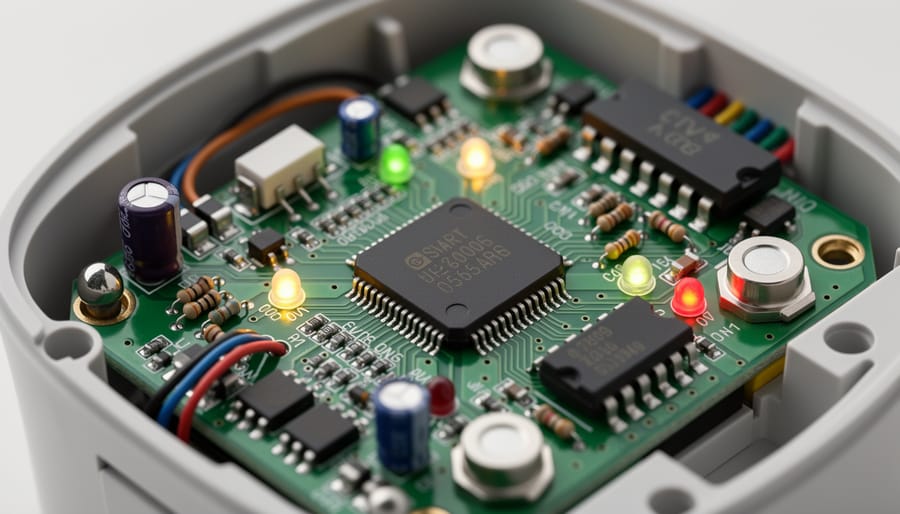
At the heart of every smart meter sits a compact assembly of electronics designed to measure, record, and communicate your electricity usage. Unlike the spinning discs of old analog meters, these devices contain sophisticated digital components working in concert to capture every watt that passes through your home’s electrical system.
- Digital Meter Chip
- The processing brain that converts electrical signals into precise digital measurements. This chip samples voltage and current thousands of times per second to calculate your power consumption.
- Communication Module
- A radio transmitter that sends usage data to the utility company, typically using cellular networks or proprietary mesh networks. This component eliminates the need for manual meter reading.
- Power Supply
- Draws a small amount of electricity from your home’s power line to keep the meter operational. It maintains the meter’s functions even during brief power interruptions.
- Memory Storage
- Stores interval usage data locally before transmission, ensuring no consumption goes unrecorded even if communication is temporarily disrupted. Most meters retain several weeks of detailed readings.
The digital meter chip performs the fundamental measurement work, sampling the electrical current and voltage flowing into your home at rapid intervals. It applies mathematical calculations to determine real-time power consumption, which gets logged with a timestamp. This data streams to the memory storage component, creating a detailed record of when and how much electricity you use throughout each day.
Meanwhile, the communication module waits for scheduled transmission windows, typically checking in with the utility network several times daily. When it connects, the module uploads stored consumption data and can also receive commands from the utility, such as firmware updates or requests for more frequent reporting during peak demand periods. The power supply keeps this entire system running continuously, drawing only a fraction of the electricity passing through the meter itself.
How Smart Meters Measure Energy Consumption
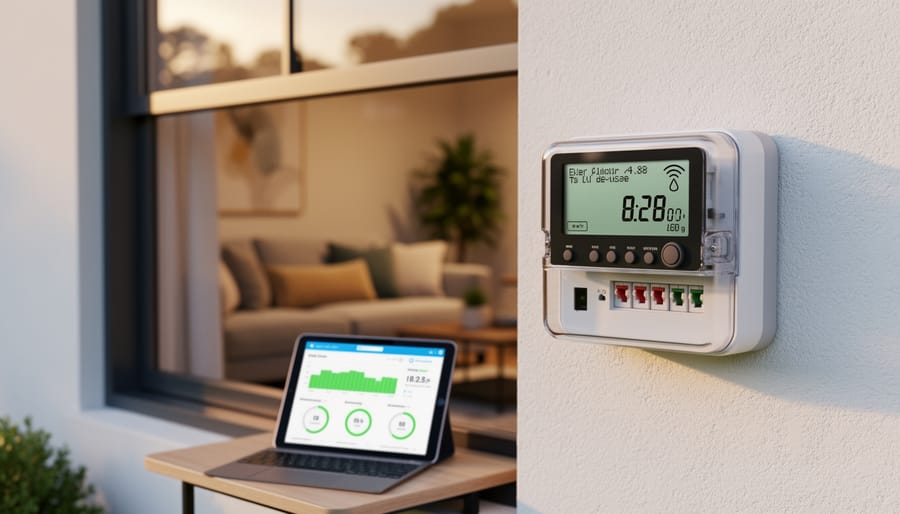
From Analog to Digital: The Measurement Process
When electricity flows through your home, the smart meter captures this raw energy flow and transforms it into precise digital data through a series of electronic processes.
The meter first samples the voltage and current in the electrical circuit hundreds or thousands of times per second using sensors called current transformers and voltage dividers. These sensors detect the electrical characteristics at extremely frequent intervals to build an accurate picture of your consumption.
An analog-to-digital converter then translates these continuous electrical signals into discrete numerical values the meter’s processor can work with. Think of this like translating a continuous wave pattern into a series of specific measurements at tiny increments of time.
The processor multiplies the voltage and current readings to calculate instantaneous power consumption, then integrates these power measurements over time to determine total energy used. This mathematical conversion turns fleeting electrical signals into kilowatt-hours, the unit that appears on your bill.
The microprocessor stores these calculations in the meter’s memory at regular intervals, typically every 15 to 30 minutes, creating a detailed record of your consumption patterns. This stored data forms the basis of smart meter reading that utilities retrieve remotely.
The entire conversion process happens continuously and automatically, requiring no manual intervention once the meter is installed and calibrated.
Time-Based Recording and Interval Data
Unlike traditional meters that provide a single monthly reading, smart meters capture your electricity usage in discrete time blocks throughout the day. Most systems record consumption every 15 to 30 minutes, creating a detailed profile of when and how you use energy.
This granular data serves two distinct purposes. For utilities, interval readings enable precise load forecasting and help identify grid stress before equipment fails. When a transformer nears capacity, the utility can see exactly which hours drive peak demand and adjust accordingly. For consumers, these time-stamped records reveal usage patterns that monthly totals obscure, you might discover your air conditioner cycles more often than expected during afternoon hours, or that phantom loads consume power overnight when you assumed everything was off.
Interval data also makes time-of-use rates possible. Utilities can charge different prices for electricity consumed during peak versus off-peak hours, giving you the option to shift laundry or dishwashing to cheaper overnight periods. Without frequent measurements, this pricing structure wouldn’t work, the meter couldn’t distinguish between electricity you used at 2 PM versus 2 AM.
Communication Networks: How Your Data Reaches the Utility
Smart meters rely on wireless communication to send your usage data to the utility company, eliminating the need for someone to physically visit your property each month. The technology that makes this possible varies depending on your location, utility infrastructure, and the terrain between your home and the nearest collection point.
Most smart meters use one of several communication methods to transmit data. Cellular networks function similarly to mobile phones, sending encrypted data packets over existing 4G or 5G infrastructure. Mesh networks create a neighborhood-wide web where meters communicate with each other, passing data from meter to meter until it reaches a central collection hub. Radio frequency systems use dedicated wireless bands to broadcast directly to utility receivers, often mounted on utility poles or buildings within range.
| Technology | Typical Range | Reliability Factors | Common Deployment |
|---|---|---|---|
| Cellular Networks | Wide area coverage | Depends on carrier signal strength | Rural and suburban areas |
| Mesh Networks | Meter-to-meter relay | Requires sufficient meter density | Dense urban neighborhoods |
| Radio Frequency | Several miles with direct line of sight | Weather and obstacles affect transmission | Mixed urban-suburban regions |
The choice of communication technology affects how smart meters read and report your consumption. Cellular systems offer broad coverage but require ongoing subscription costs to mobile carriers. Mesh networks prove cost-effective in densely populated areas where meters are close enough to relay signals reliably. Radio frequency systems work well where utilities already maintain their own communication infrastructure.
Regardless of the technology used, the transmission process happens automatically at scheduled intervals throughout the day. Your meter collects consumption data, packages it with your account identifier, encrypts the information, and sends it wirelessly to the utility’s data management system where it’s processed for billing and grid monitoring purposes.
What Utilities Do With Your Smart Meter Data
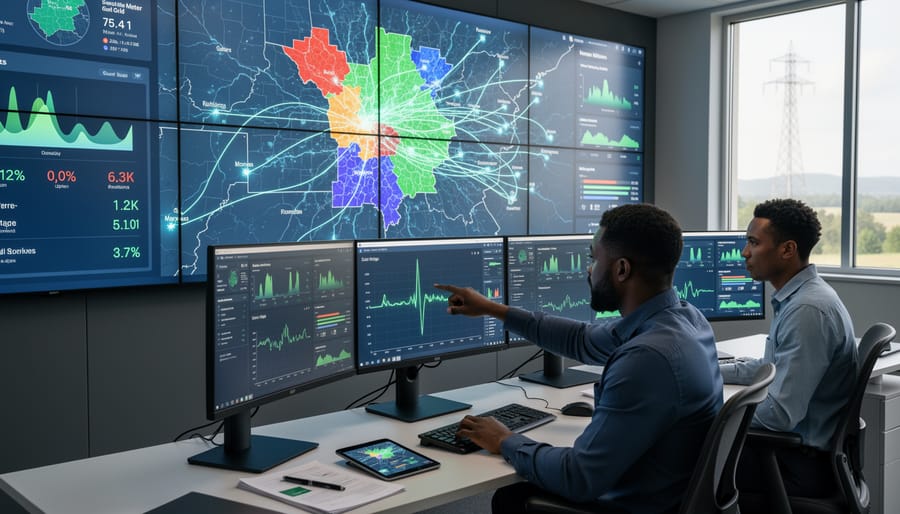
Your smart meter transmits consumption data to the utility company several times per day, creating a detailed picture of your household’s energy use. This information flows into multiple systems that keep the grid running efficiently and ensure you’re billed for actual usage rather than estimates.
The most straightforward application is billing. Instead of sending a meter reader to your home monthly, utilities pull your exact consumption remotely. This eliminates estimated bills based on historical usage patterns and ensures you pay only for what you’ve consumed. If you’re away for three weeks, your bill reflects that absence.
Beyond billing, utilities use aggregated smart meter data for grid management. By monitoring consumption patterns across neighborhoods and regions, operators can predict demand spikes and adjust power generation accordingly. When meter data shows usage climbing during a heat wave, utilities can bring additional generation capacity online before the grid becomes stressed.
Outage detection represents another practical use. When your meter stops communicating, the utility’s system flags a potential outage in your area. By mapping which meters went dark, operators can pinpoint the location and extent of power failures without waiting for customer calls. This accelerates restoration efforts, particularly after storms when call centers become overwhelmed.
Some utilities run demand response programs that rely on interval data from smart meters. These programs may offer lower rates during off-peak hours, encouraging customers to shift energy-intensive activities like running dishwashers or charging electric vehicles to times when grid demand is lower. The meter data enables this time-based pricing structure and tracks participation automatically.
Smart Meter Usage Benefits for Consumers
Smart meters shift the power dynamic between consumers and utilities by providing visibility into energy consumption patterns that were previously hidden. Instead of receiving a single monthly total, you gain access to detailed breakdowns showing exactly when and how much electricity you use throughout each day.
The most immediate benefit is billing accuracy. Traditional meters require manual readings that may occur at irregular intervals, leading to estimated bills that can swing wildly from month to month. Smart meters eliminate this guesswork by recording your actual consumption and transmitting it directly to your utility. You pay for what you use, nothing more.
Beyond accurate bills, the real value comes from actionable insights. Most utilities now offer web portals or mobile apps that display your consumption data in visual formats, graphs showing hourly usage, comparisons between days or weeks, and alerts when consumption spikes unexpectedly. This transparency helps you identify energy-wasting appliances and habits. You might discover your water heater runs continuously during peak hours, or that leaving devices on standby adds noticeable costs over time.
Some utilities use this data to offer time-of-use rates, charging less for electricity consumed during off-peak hours. Armed with your usage patterns, you can shift activities like running the dishwasher or charging an electric vehicle to cheaper periods. The meter enables you to make informed decisions rather than operating blind, turning energy management from an abstract concept into something you can actively control and optimize based on your household’s specific patterns.
Security and Privacy in Smart Meter Systems
Smart meter systems employ multiple layers of protection to safeguard the consumption data flowing between your home and utility companies. When your meter transmits readings, the information travels through encrypted channels that scramble the data into unreadable code during transit. This encryption ensures that even if someone intercepts the transmission, they cannot decipher your usage patterns or personal information.
Utilities implement strict access controls that limit who can view your detailed consumption data. Typically, only authorized personnel with legitimate business purposes can access individual meter records, and these access attempts are logged for auditing. The systems storing your usage information maintain separate databases for billing and operational functions, adding another protective barrier between your digital content and potential security breaches.
Privacy regulations vary by region but generally require utilities to obtain your consent before sharing detailed usage data with third parties. Many jurisdictions mandate that utilities anonymize data when using it for research or grid planning purposes, removing identifying information before analysis. You often have the right to request copies of your own data and understand how it’s being used.
The communication networks themselves include authentication protocols that verify each transmission comes from a legitimate meter rather than an imposter device. These technical safeguards work alongside utility policies that define data retention periods and establish procedures for secure data deletion when no longer needed for billing or regulatory requirements.
Common Issues and How They’re Resolved
Communication failures rank as the most frequent smart meter issue, occurring when network coverage weakens or hardware malfunctions interrupt data transmission. When your meter stops sending readings, utilities typically detect the gap within 24 to 48 hours through automated monitoring systems. They can often restore connectivity remotely by resetting communication modules or adjusting network settings without requiring a technician visit.
Billing discrepancies usually stem from either misconfigured meters recording incorrect tariff rates or sudden spikes in consumption that appear abnormal to customers. Utilities investigate these complaints by reviewing interval data to identify whether the increased usage matches specific times of high-demand appliance operation. If the data reveals genuine consumption rather than a metering error, customer service teams walk homeowners through their usage patterns to explain the charges. Disputed meter accuracy can be verified through on-site testing using calibrated reference equipment.
How do I know if my smart meter has stopped working?
Your utility should notify you if they stop receiving readings. You can also check your online account, if it shows estimated bills instead of actual readings, contact your provider.
Can smart meters give incorrect readings?
While rare, configuration errors or hardware faults can occur. Request a meter test if your bills seem inconsistent with your usage habits.
Who pays for smart meter repairs?
Utilities own the meters and typically cover repair or replacement costs at no charge to customers.
Display failures represent another common complaint, where the meter’s digital screen becomes unresponsive or shows error codes. These issues rarely affect data collection since the measurement and communication components operate independently from the display. However, utilities may schedule replacement visits if homeowners need to view real-time consumption directly on the device rather than through online portals.